The House of Warren
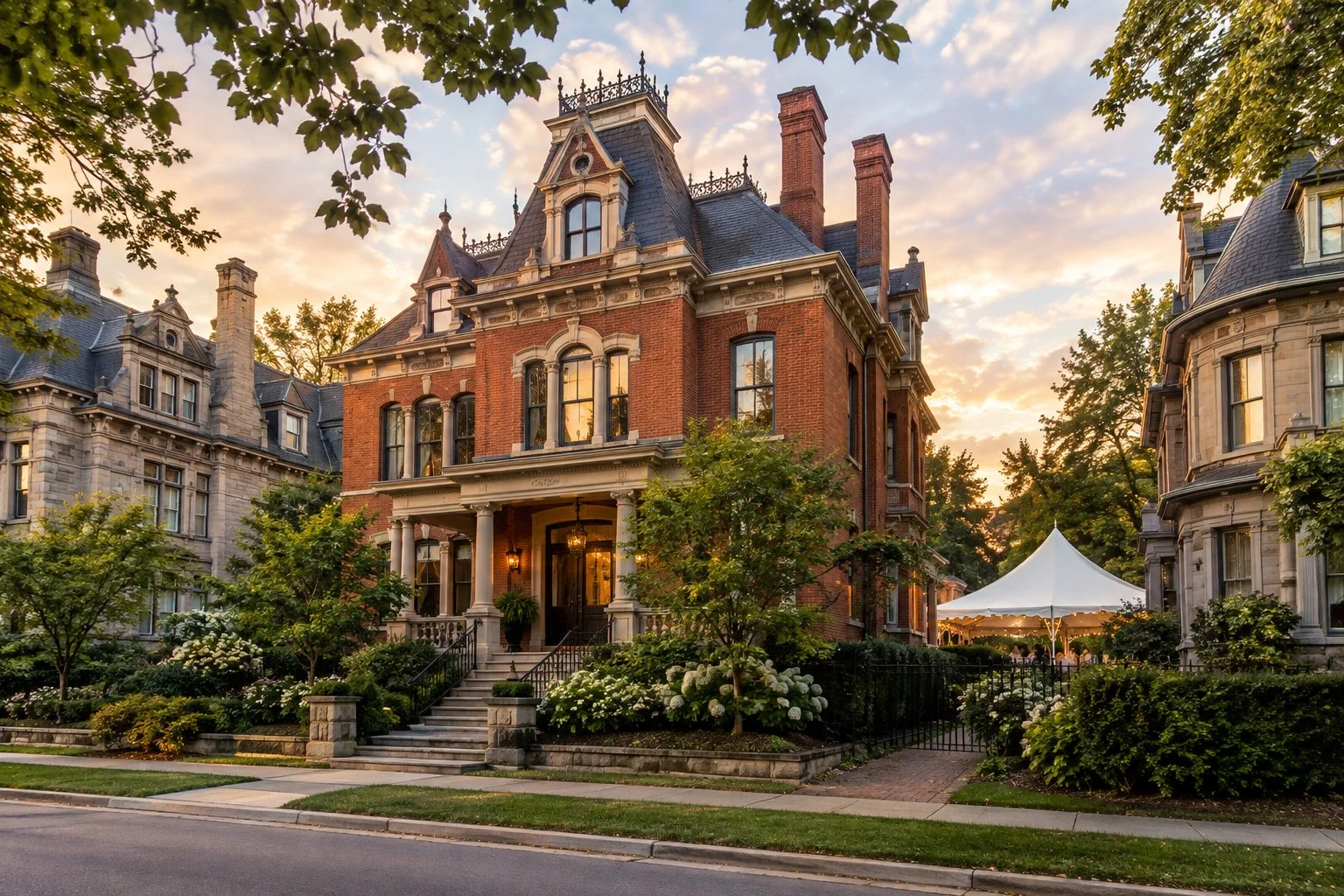
When Ali, Casey, and I were in college down in central Illinois, we lived in this great place just a block off campus. It was situated at the top of a hill overlooking the town smack dab in the middle of Greek Row, snuggled between the Beta and SAE houses—a modest, three-bedroom house with a front porch and back patio, and yard that made it ideal for barbecues and other themed or not themed parties.
It belonged to William Warren, PhD, dean of the business college. He attended the university on the G.I. Bill after fighting in North Africa as a marine in World War II. He spent a few years after graduation climbing the ladder at large retailers in St. Louis and Chicago before deciding that teaching was where he could be most effective. He got his master’s degree in education, then his doctorate, and was a business professor for twenty years before accepting the position of dean.
He bought the house in the early 1970s when it was part of a charming block of similar homes dating back to the late 1800s. Greek Row was located across campus back then. But then the Great Greek Fire of 1978, which started in the Pike house after an initiation mishap with a candle and a nitrous tank burned through seven fraternity and four sorority houses. Amazingly, no one was seriously hurt, and the insurance money received allowed those eleven homeless Greek chapters to purchase new houses on old land.
The organizations worked together to buy up all of the property on both sides of several blocks where Dr. Warren and his family lived. Most of the houses were owned by faculty of the university. Some of the houses had been converted into apartments. The Greeks bought out everyone except for Dr. Warren. That property was the first thing Dr. Warren owned as a younger man. It was where he and Mrs. Warren raised their children and he’d be damned if he was going to surrender it to any entity. He had once stabbed a Nazi through the eye while a bayonet cut through his abdomen, he sure as hell wasn’t going to be intimidated or muscled out by a bunch of frat bros.
So they settled around him. And because he was the dean of the college and one of the most respected and longest serving members of the faculty, and later the administration, the fraternities knew that if their parties ever got out of hand or broke any kind of law, Dr. Warren could have any number of individual students booted out of school. The Greeks learned to throw their large parties elsewhere. And so, Greek Row at our college, was the quietest and most beautiful part of town.
By the time the three of us met and became fast friends in a TV production class freshman year, Casey had already charmed his way into Dean Warren’s heart. There was nothing manipulative about it, the young student and the old professor just hit it off. And because Casey loved to cross-pollinate his circles of friends, Ali and I became pals with the dean and his wife.
We would have dinner at their home every Sunday night. Mrs. Warren was an incredible cook and the sweetest lady you’d ever meet. The dean, whom we nicknamed WW2 because of his time in the service and his initials, had a story for any occasion. And if he ever happened to tell a story we’d heard before, we never minded. His stories were like favorite songs. Every tale he told came with some kind of life lesson or philosophy that was readily pertinent to whatever was happening in our lives at that time. I never knew any of my grandparents, so the Warrens filled that role. They had nine actual grandchildren but the three of us always felt like we were as much blood as any of the others and the dean’s family felt the same.
WW2 died peacefully in his sleep during the summer between our junior and senior years. He was seventy-nine years old, which we always felt was too young. The cause of death, we were told, was old age, which was a lazy determination. But okay, an incredible educator, a loving husband, father and grandfather—surrogate and natural—was gone. The three of us were devastated.
Ali and I were living in a dank basement apartment on campus that summer. She was a staff writer at the local alternative newspaper, and I was convincing myself that my bartending job was my way of learning the food and beverage industry because I figured if I was going to be a marketer, I needed to understand how different industries worked. Really, it was more about the girls and the free drinks. Casey was interning up in Chicago, cutting his teeth in politics working in the Cook County media department. He came down for the funeral and we all attended the family-only gathering at the house. Before we left to drink for free at my bar, Mrs. Warren pulled us aside.
“Boys, I’m moving,” she said. “I’m tired of these Midwestern winters so I’m moving to Key West. William and I discussed it a while ago, and we decided that if anything happened to him while you were still attending school here, I’d move somewhere warm and we’d give you the house. So, the house is yours. I’ll have it cleared out for you to move in and get settled by the time the semester starts. I don’t want you worrying about rent. The house is paid for and I don’t need your money. Don’t worry about the property taxes. Just pay the utilities and anything you break.
“Mrs. Warren,” Casey said. “This is an incredible gesture, but why?”
“William loved you boys so much. I love you, too. You were so important to him. And to me. You are as good as family.”
“To that point, your kids are okay with this?”
“What difference is it to them? They already have houses, and besides they don’t live here. They’ll deal with it when you boys graduate. No, the house is yours until then. Take care of it but have fun—this is your senior year. The only condition is that you promise me that you’ll keep in touch. I want to hear from all of you every Sunday night at dinnertime.”
We kept that promise to Mrs. Warren, as well as followed her instruction to have fun. With the Greeks so accustomed to throwing parties elsewhere, our house had become known as the best party house on Greek Row. By the end of the fall semester, the House of Warren, as it was affectionately called, had earned the reputation as being the place for the best parties hosted by any student group or organization officially affiliated with the university or otherwise.
That reputation made its way to an alumnus who worked for Rolling Stone, which led to a small article being written about us and the House of Warren in an issue looking at the culture of universities. (That same alumnus was the connection Ali used to land a staff position in the magazine’s New York office right after graduating.)
What was most impressive, in my opinion, was that we threw such large and intricate parties—events, really—without destroying the house. Any holes that found their way into walls or toilets that decided to shatter or furniture that had burst into flames were easily repaired and replaced. We used the money we would have otherwise spent on rent to stock a very active maintenance fund.
We avoided most trouble with the local authorities because we enforced a strict twenty-one and over entrance policy. As the House of Warren’s treasurer, I earmarked a portion of the maintenance fund to cover the cost of paying students from the Evangelist’s Club for God to check IDs at the door. It was a student religious group made up mostly of kids who did not imbibe in alcohol or recreational drugs, loosely viewed dancing as socially reprehensible and considered rap, hip-hop, and rock ‘n’ roll to be the music of Satan. However, they were not above taking the money associated with all of those things. I did feel a little bad when the group would protest homosexuality on campus knowing that our money paid for their hate signs. But hey, that’s capitalism. Ali wasn’t fully out of the closet yet, so she never made much of a fuss about it. Noise complaints were never an issue because our neighbors—the Greeks—would either be elsewhere at their own parties or making the noise at ours.
So we only had one real encounter with the cops.
It was shortly after the fall semester started and the few parties we had thrown had not yet taken their legendary form. Playing Grand Theft Auto and drinking in our living room, the three of us were discussing how we could make the next bash even bigger. I wouldn’t say that any of us were heavy drinkers, at least not any heavier than the average college student, but we could certainly put them back. Our heaviest drinking nights while living in the House of Warren were not on party nights, but rather on nights like this one where it was just the three of us hanging out.
After polishing off the last third of the beer remaining in the keg left from the party the previous weekend, we dove into a bottle of Cutty Sark scotch, which I can tell you today, is the worst swill I’d ever put in my mouth. As I manically ran over police and pedestrians in a stolen tank on the TV, Ali passed out and Casey launched into an excitable one-man brainstorming session. He toyed with the idea of building a bandstand in the house and inviting local bands to play at the parties but then considered that we start a band and play our own parties. He lost interest in the whole band idea when I reminded him that Ali was the only one of us who played an instrument. He threw out gems like having fire breathers, caged exotic animals, a simpler petting zoo you might find at a kid’s fifth birthday party, getting a major liquor brand to sponsor a party, selling raffle tickets for a luxury car, and on and on.
The problem with all of the ideas was that, other than the liquor sponsorship, they required a significant amount of money. Money we didn’t have. And if we increased our party entry fee greater than five bucks, we’d price ourselves out of the market. Defeated, he plopped down on the couch next to me just as I was kicking a hooker to death.
“What about a tent,” he said.
“What about a tent?” I asked.
“We could get one of those big tents they use for weddings and shit.”
“You really dropped the bar from having white tigers. And still, those tents aren’t cheap.”
He watched intently the video game playing out on the TV screen as I drunkenly instructed my character to carjack a fancy sports car.
“Why don’t we steal it?” he said like it was a novel idea.
“We can’t steal a tent.”
“Why the hell not?”
“First of all, tents like that are huge and have many different pieces. It’s not like walking onto a campground and yanking a Coleman two-man tent. And secondly, even if we could do that, like if we had enough people to break it down and carry it back here, we’d need the opportunity. I don’t ever see these things just hanging out without an event actually happening in them.”
“I do.”
“What do you mean?”
“Parents Day.”
“What about it?”
“It was yesterday. They always have a big tent for the food and stuff for after the football game. I rode my bike past it this afternoon. It’s still there. We can go get it.”
“I’m not going to steal a tent, or attempt to steal a tent.”
“But our yard is perfect for it.”
“I don’t disagree. It’s just that actually procuring a tent this way is an exercise in futility.” As I said that, I drove the sports car off a bridge trying to evade the police and drowned. I was officially too drunk to drive. I turned the game console and the TV off and said, “I’m going to bed.” I gently slapped Ali across the cheek as I walked past the chair she was sleeping in. “Hey, Allison. Wake up. Go to bed.” She lazily gave me the finger and adjusted in the chair.
The problem with all of the ideas was that, other than the liquor sponsorship, they required a significant amount of money. Money we didn’t have. And if we increased our party entry fee greater than five bucks, we’d price ourselves out of the market. Defeated, he plopped down on the couch next to me just as I was kicking a hooker to death.
At the police station the next morning, the campus cops explained it to me like this: At approximately three o’clock in the morning, a campus police officer on his routine patrol heard what he considered unusual and suspicious sounds coming from the parking lot of the university stadium. Upon closer investigation, the officer confirmed that the sounds he heard were those of large metal tent posts dropping onto the asphalt. A young man—Casey Basch—was singlehandedly breaking down the large, white event tent. It was clear to the officer that the suspect was not an employee of the university and therefore, not authorized to affect the tent, which is university property, in any way, shape, or form. As such, the witness was both trespassing on and vandalizing university property. Although the witness was above average in size—about six-feet, two-inches and between one hundred-ninety and two hundred-ten pounds, his behavior did not indicate that he posed any risk to the safety of either party. Upon exiting his patrol vehicle and approaching the suspect, the officer confirmed that the suspect was clearly intoxicated and in fact, seemed to have little to no recognition of where he was or what he was doing. The officer asked the suspect to come with him to which the suspect, barely able to form the words, asked the officer if he’d like to assist him with breaking down the tent, carrying it back to his home and setting it up in his backyard. When the officer rejected the request, the suspect agreed to come with the officer, mumbling about his (quote) spineless roommate (end quote) until arriving at the station.
Up until his retirement, my father was a big deal attorney—he was the first partner since those who founded the firm to have his name added to the door and letterhead, and was on the shortlist to be Clinton’s attorney general. Whether through all the years of seeing my dad work and hearing him talk about his cases, or through genetics, I knew how to best handle the situation. Since no real damage had been done to the tent and no one was hurt, I convinced the cops to let Casey go with nothing more than a one hundred-twenty-five dollar public intoxication fine. They were ready to release him to me but because he had bad mouthed me in the back of the squad car, I asked if they wouldn’t mind keeping him locked in the drunk tank until I finished up with classes later that afternoon. They said it would be their pleasure.
We ended up becoming friendly with those three cops who were on duty at the time and familiar with the botched Casey Basch Tent Heist. In fact, we personally invited them to our last blowout party at the House of Warren that following May. And they didn’t even flinch when they arrived and saw that tent perfectly set up in our backyard with people socializing, drinking, and eating underneath its cover.
So, ultimately, Casey did steal the tent. Ali and I had no idea until the morning of the party when we saw the thing hoisted in the yard. Casey had masterminded a complicated Oceans 11-type plan to get it. And since he couldn’t trust me, or Ali apparently, he enlisted the only other people he could trust to help him pull it off—our friends in the Evangelists for God Club.
David Himmel is the author of the books Hope Idiotic, The Last DJ, and A Camp Story. An award-winning journalist, he has contributed to several news outlets including POLITICO and The Atlantic. Leader of his two sons and their dog, he's a sailor who does not spend enough time on his boat. Subscribe to his Substack, The Autopsy .