I Like to Watch | Digger (2026)
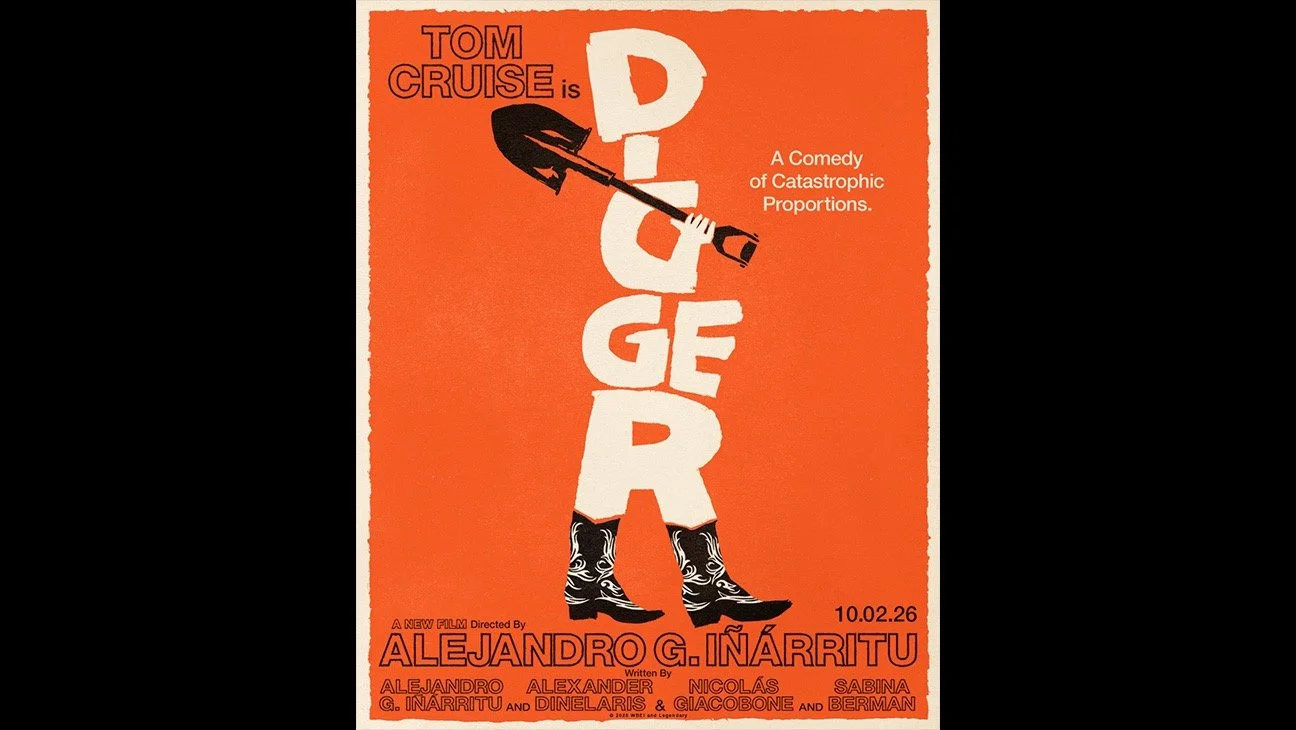
UNCOMMON GENIUS. Digger is currently receiving the sort of reviews that make me immediately want to see a movie. Critics are calling it pretentious. Self-indulgent. Overlong. Obnoxious. Confusing. Too loud. Too strange. Too impressed with itself. Rotten Tomatoes currently has the critics essentially split down the middle, while audiences are noticeably warmer toward it.
All of which sounds less like an indictment and more like a fucking recommendation. So mom and I caught it Tuesday night among maybe ten other people in the theater.
Tom Cruise plays Digger Rockwell, an obscenely wealthy Texas oil baron whose appetite for extracting shit from the Earth finally produces the predictable result: the Earth starts fighting back. A catastrophic methane event threatens humanity, governments panic, scientists scream, politicians posture, and Digger decides that the person best qualified to save civilization from the catastrophe created by Digger Rockwell is, naturally, Digger Rockwell.
This is American exceptionalism reduced to one magnificent asshole.
And Cruise is fucking spectacular.
But if that were Alejandro González Iñárritu’s only game to play, it wouldn’t be something so metatheatrical, so layered, so indicting of each and every one of us in complicity.
Digger made me feel like I did when I first saw Terry Gilliam’s Brazil (which is one of my top five favorite films ever made). Essentially a dream within a dystopian bureaucratic nightmare, Brazil is the satirical bridge between Kubrick and Iñárritu with a Monty Python mentality.
Surrealist, bellowing criticism of a reality almost too ridiculous to satirize, belligerent, and endlessly entertaining, Iñárritu understands that satire in 2026 has a nearly impossible problem: reality has become almost impossible to exaggerate. Dr. Strangelove could turn nuclear annihilation into absurd comedy because the spectacle of powerful idiots casually discussing Armageddon felt grotesque. Today you can simply open your phone and watch powerful idiots casually discussing Armageddon before breakfast.
So Digger doesn’t whisper. It screams.
For the past couple of decades, Cruise has increasingly transformed himself from actor into human special effect. The man runs. He jumps. He hangs from airplanes. He drives motorcycles off cliffs. He treats mortality like an annoying production assistant who keeps wandering into the shot. And I love every minute.
Here, Cruise is accessing the same talents he showed us in Born on the Fourth of July. He’s acting, man.
He disappears beneath prosthetics, a grotesque physical swagger, and an exaggerated Texas drawl, transforming himself into this swollen monument to American ego. Early on, I completely forgot what Tom Cruise/Ethan Hunt even looked like. Critics disagree violently about whether the performance works, but even many negative reviews acknowledge the sheer risk Cruise is taking here. Time Out went further, praising his return to “proper acting” in a four-star review.
Watching Cruise as Digger is like watching Ronald Reagan, J.R. Ewing, Elon Musk, Yosemite Sam, and the guy who owns seventeen car dealerships get thrown into the telepod from The Fly.
John Goodman plays President Compson with the subtlety of a rhinoceros crashing through a Bass Pro Shop, while Riz Ahmed’s scientist attempts the increasingly hopeless task of introducing reason into a civilization that has discovered reason doesn’t generate particularly good engagement numbers. “Perception isn’t reality!” he cries. “Perception is perception!”
Sandra Hüller, Jesse Plemons, and Michael Stuhlbarg populate a world in which practically everyone understands something has gone catastrophically wrong but nobody can stop performing their assigned role long enough to do anything about it. The cast is absurdly stacked, and Iñárritu uses them less like naturalistic characters than pieces in an enormous political cartoon.
And then Digger does something even crazier. It starts digging underneath itself.
I won’t spoil the specifics until below because discovering what the movie is actually doing is half the fun. I will say that almost everything in the trailer comes from the first thirty minutes of a two-hour film. Suffice it to say that the film eventually begins questioning not simply billionaires or politicians or environmental catastrophe but the usefulness of satire itself. It begins asking the question of what stories we will tell about the end of the world to those who survive it?
That’s where Digger stopped being merely entertaining for me and became fascinating.
Because what good is satire in a culture incapable of embarrassment?
What exactly is the comedian supposed to do when the people being mocked proudly repost the joke?
What does art accomplish when every warning becomes content, every outrage becomes branding, and every apocalypse eventually gets its own limited-edition commemorative Stanley cup?
Adam McKay’s smug climate crisis movie Don’t Look Up felt like it congratulated itself for exposing the stupidity and hypocrisy of climate deniers. We have spent decades believing that exposing hypocrisy somehow defeats hypocrisy.
It doesn’t.
Sometimes hypocrisy just shrugs.
Sometimes hypocrisy gets elected.
Sometimes hypocrisy buys the platform.
Sometimes hypocrisy becomes a fucking lifestyle brand.
Don’t Look Up spends much of its running time screaming, WHY CAN’T THESE IDIOTS SEE WHAT WE SEE?
Digger asks the considerably more uncomfortable question:
What if everybody already sees it?
That is the genuinely bleak engine underneath all the clown makeup of Digger. The movie isn’t merely laughing at the lunatics running the asylum. It is wondering whether pointing out that they’re lunatics accomplishes anything whatsoever.
Which may explain why the movie’s metafictional turn has infuriated so many people. It deliberately yanks the audience away from the comfortable experience of watching Bad Rich Man Destroy Planet and starts asking uglier questions about the people sitting comfortably in theater seats enjoying the spectacle. The narrative begins folding inward, interrogating its own theatricality and asking whether art about catastrophe becomes just another consumer product sold during the catastrophe.
That’s a much nastier question, and a much more interesting movie.
None of this is subtle. Who gives a shit?
Somewhere along the way we decided subtlety was automatically evidence of intelligence. Sometimes it is. Sometimes subtlety is simply cowardice wearing tasteful glasses.
SPOILERS FROM HERE ON OUT
For the first thirty minutes of the movie, Tom Cruise is Digger Rockwell, a fossil-fuel Caligula with the swagger of a man who believes consequences are something that happen to poor people. His drilling disaster has unleashed Judy, an ice shelf roughly the size of Maryland now bearing down on Europe, while President Compson and the assembled machinery of government respond with increasingly ridiculous solutions. Cruise is doing something he hasn’t allowed himself to do nearly enough over the past couple decades with the sole exception of Tropic Thunder: look ridiculous.
Not charmingly ridiculous. Not Maverick-has-a-bad-day ridiculous. Pathetic. Vain. Weak. Digger is a man who has spent so long confusing wealth with competence that he can no longer imagine a universe in which he isn’t the smartest guy in the room. The last time we saw this type of Cruise was Jerry Maguire but he grew and fell in love. Digger does not. Digger shows his ass, his dying cat, his vanity, and his ridiculous rich capitalist confidence.
And then he forgets his line.
That’s the moment Digger goes from being a very funny, very angry satire into something much stranger. You see, Digger Rockwell isn’t Digger Rockwell. Tom Cruise is actually Curtis Markson, an actor playing Digger in a theatrical production called Fossil Fools. The mansion, the politicians, Judy, the whole fucking catastrophe we’ve been watching is theater. The movie has quietly pulled the floor out from underneath us and revealed the stage.
Nice trick except Iñárritu isn’t finished. Digger Rockwell was real. Judy was real. The catastrophe was real. We aren’t watching a play warning people about what might happen if humanity keeps treating the planet like a gas-station toilet. We’re watching a play being performed decades after humanity already did it. Civilization fucked around, found out, survived in some diminished form and then did what civilization always does with catastrophe once enough time has passed.
We turned it into entertainment.
That’s where Digger gets genuinely vicious.
Jesse Plemons’ Kenny isn’t simply some wealthy patron financing provocative political theater. He’s Digger Rockwell’s nephew. The family whose greed helped destroy the world is now financing the art condemning the greed that destroyed the world because that’s what we do. We metabolize atrocity into content. We turn wars into Oscar contenders, murder into true-crime documentaries, political disasters into prestige miniseries, and environmental collapse into $125 million movies starring Tom Cruise. Give us enough distance from anything horrific and somebody will slap three acts on it and start selling commemorative coffee mugs in the lobby.
Which means the real question Digger asks isn’t whether climate change is bad. Jesus Christ, we know. The question is much uglier. What good is brilliant art about catastrophe if we keep making the catastrophe anyway?
Everybody gets to feel good about Fossil Fools. The actors get applause. The audience gets catharsis. The wealthy benefactor gets to demonstrate his enlightened conscience. Everybody recognizes Digger as the monster. Everybody understands the satire. Everybody leaves knowing precisely what went wrong. Not one fucking thing gets unfucked.
Then the play ends.
Applause.
And a Level Four warning.
Everybody calmly puts on their masks and walks outside. That’s when Iñárritu finally shows us the real world.
It’s fucked.
Flooded, poisoned, authoritarian, environmentally devastated Manhattan. The theatrical apocalypse we’ve spent the movie watching suddenly looks almost quaint compared with the mundane reality outside. Humanity hasn’t solved the catastrophe. Humanity has adapted to it. We have masks. We have procedures. We have announcements. We have theater. We have normalized the end of the world.
And that, more than anything, is what makes the ending work for me. Melanie Safka’s “Look What They’ve Done to My Song, Ma” plays while everybody wanders back into this ruined civilization, until even the song is interrupted by another Level Four announcement. Eventually the people disappear, the announcements disappear, the cleverness disappears and we’re left with nature.
NOTE: The Level Four announcement during the credits is for us. It reminded me of the ending of WNEP Theater’s The Armageddon Radio Hour. The play, a parody of Golden Age radio, ended with the world… ending. And the cast drank Kool-Aid to commit mass suicide rather than deal with the horrors of a destroyed world. The kicker? As the audience left the theater, they were offered their own glass of Kool-Aid. Level Four, motherfuckers.
Nature doesn’t give a shit about our reviews. It doesn’t care whether the play was good. It doesn’t care whether we understood the metaphor.
Suddenly the title becomes perfect. Digger spends his life digging—for oil, money, power, status. Curtis digs into Digger. The play digs up the past. Iñárritu spends the movie digging through all the comforting bullshit we tell ourselves about progress, responsibility, and the transformative power of art.
Keep digging long enough and eventually you find the hole.
I understand why some people are going to hate this movie. It’s overstuffed. It’s self-indulgent. It knows exactly how clever it is and occasionally grabs you by the collar to make certain you noticed. This isn’t designed to simply entertain. It’s designed to indict and convict the very people paying money to see it. If Cruise is risky jumping and hanging from a helicopter, making a movie that positions him as the selling point that tells the audience what shitholes we are is a genuine artistic risk and the only kind an actor with his money and clout can do. Fucking A, Tom.
What exactly is a gigantic expensive movie about environmental catastrophe accomplishing? We sit in an air-conditioned multiplex eating cheese and caramel popcorn while Tom Cruise pretends to destroy the planet. We laugh at the billionaire. We recognize the hypocrisy. We understand the symbolism. We walk out feeling slightly smarter and perhaps even slightly morally superior because, unlike Digger Rockwell, we get it.
Then we get in the fucking car and drive home in our fossil fuel vehicles and that’s a cruel idea for a studio movie.
Cruise is exactly the actor required to sell it because Cruise may be the last great avatar of the idea that Movies Matter. The guy practically made preserving theatrical cinema his personal crusade. He jumps off cliffs, hangs from airplanes, and risks turning himself into pavement because the movies must survive. Iñárritu puts that guy at the center of a movie whose ultimate argument might be that art cannot save us.
Art can warn us.
Art can ridicule us.
Art can document us and it can mourn us.
But eventually somebody has to actually do something.
And if nobody does? No sweat.
Twenty-five years later we’ll make a terrific fucking play about it.