Jackson Wallace returned to the world nine months after his arrest.
The official statement said he had voluntarily entered a restorative residency after experiencing exhaustion related to the demands of artistic leadership. His photograph showed him smiling in a cream sweater. The sweater belonged to the Ministry. The smile belonged to no one.
He was thinner.
His hair had gone white.
His left eye watered in bright light.
He could no longer walk past a theater without vomiting, but television screens produced a sensation of mild comfort.
Director Wallace arranged employment. This was described as continuity of care.
Jackson became a junior copywriter at BrightHouse Global, an advertising firm occupying six floors of a glass tower downtown. The lobby featured a living wall of moss. Nobody knew whether the moss was alive.
BrightHouse’s mission was to build emotional ecosystems around consumer truth. Jackson’s job was to write slogans.
He was excellent.
Not good.
Not competent.
Excellent.
On his first day, a creative director named Pippa placed a bottle of dish soap on his desk.
“We’re looking for language around resilience,” she said.
Jackson stared at the bottle. Inside his skull, something moved. A little black animal. It had once been a wolf. Now it wore a vest.
He wrote:
TOUGH ON GREASE. GENTLE ON YOUR STORY.
Pippa inhaled sharply.
“That’s beautiful.”
The slogan tested in the ninety-eighth percentile.
For a bank, Jackson wrote:
YOUR FUTURE ALREADY KNOWS YOUR NAME.
For frozen pizza:
TONIGHT DESERVES CHEESE.
For a home-security system:
FEEL SAFE ENOUGH TO LIVE.
For a dating app:
SOMEONE IS WAITING TO BECOME YOUR PAST.
The client rejected the last one.
Jackson revised it to:
THE FUTURE IS CLOSER THAN YOU THINK.
The client loved it.
He was promoted. Soon he led meetings.
He wore black turtlenecks.
He said things like emotional architecture and brand intimacy.
He learned that advertising was theater where the audience was not told it had bought a ticket.
He worked twelve-hour days and never complained.
His colleagues admired his calm. They did not see him go into the restroom after difficult meetings and press his forehead against the mirror until the nausea passed.
They did not see him write strange sentences on paper towels.
THE SEA DOES NOT—
Then stop.
EVERY CENSOR—
Then stop.
COMFORT IS—
Then tear the towel into pieces, flush them, and wait for the toilet to threaten him.
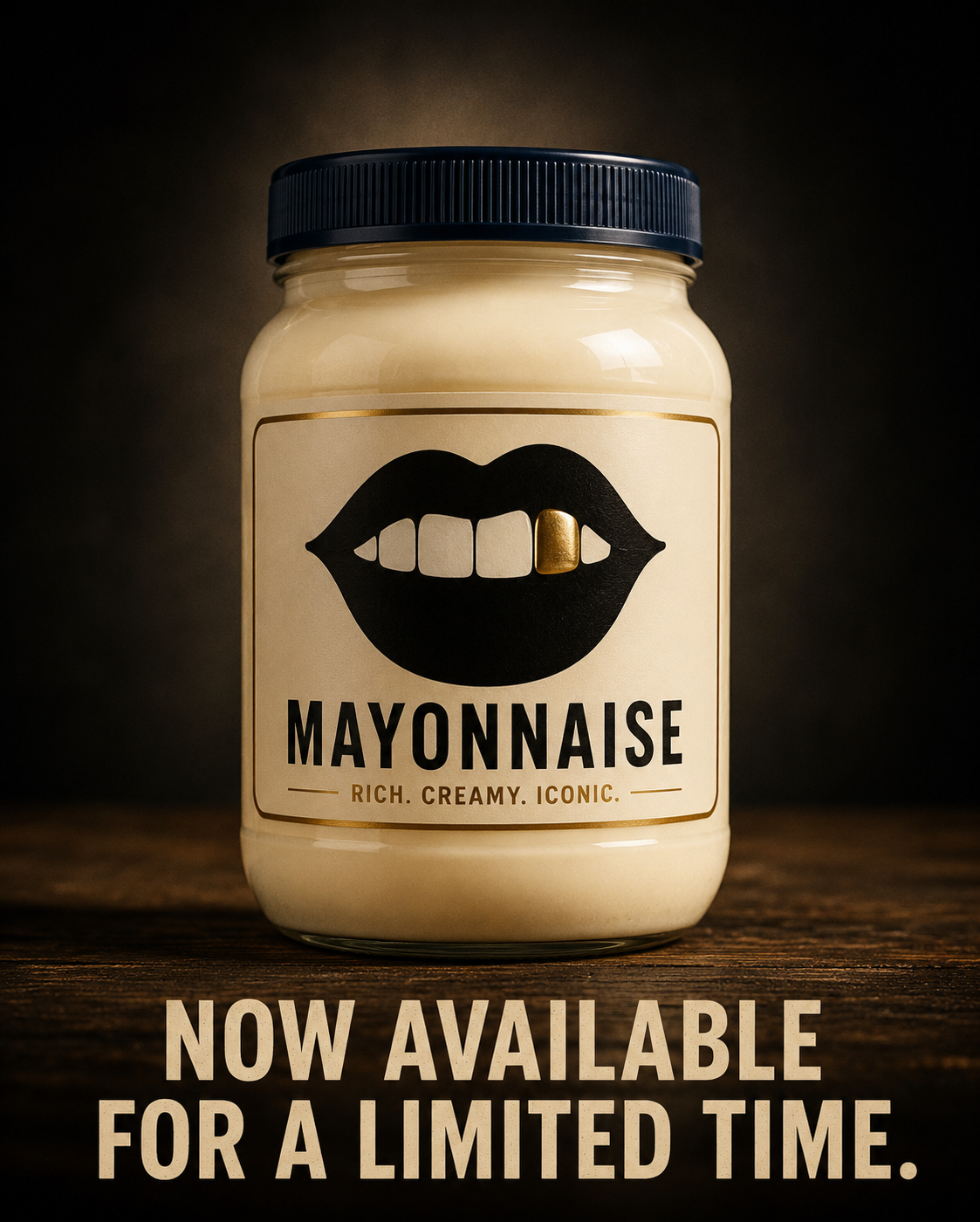
The Wound was replaced by a luxury apartment development called The Aperture. The lobby displayed a mural honoring the neighborhood’s artistic history. The mural included a black mouth with one gold tooth.
The leasing office did not know what it meant.
Former members of the company scattered.
Some quit theater. Some moved to Los Angeles, which was another form of quitting theater.
The actress with the glass eye became a pharmaceutical spokesperson.
The stage manager opened a bakery.
The actor who played the little fascist was elected to city council.
The apology jar was sold at auction for nine thousand dollars.
Director Wallace sent Jackson a note.
TRANSFORMATION IS NOT ERASURE.
Jackson read it three times. He felt nothing.
Three years after his release, BrightHouse won the account for Halo Mayonnaise.
Halo was losing market share among younger consumers who associated mayonnaise with whiteness, cholesterol, picnics, and grandparents who said troubling things after two beers. BrightHouse’s task was to reposition mayonnaise as a vehicle for personal expression.
The campaign budget was sixty million dollars. Which was more than the combined operating budgets of every small theater Jackson had ever known.
The pitch would occur before Halo executives, distributors, consultants, image strategists, food psychologists, and one cultural sensitivity auditor.
Jackson’s team worked for six weeks.
They developed mood boards.
They commissioned research.
They interviewed people in kitchens.
They identified a core consumer referred to as The Fluid Eater.
The Fluid Eater did not purchase condiments.
The Fluid Eater curated edible identity.
Pippa presented the campaign to Jackson.
The slogan was:
HALO MAYONNAISE: MAKE IT YOURS.
Jackson looked at the words. Something inside him screamed. Not loudly. The scream of a person buried beneath wet concrete.
Pippa smiled.
“Thoughts?”
Jackson said, “The sea doesn’t learn anything.”
The room became still.
“What?” Pippa asked.
His left eye began to water.
“Nothing.”
That night he dreamed of The Wound.
The theater was full. Mannequins sat in every seat. Director Wallace stood onstage wearing a cream sweater. She held a jar of mayonnaise. Jackson sat alone in the balcony. Director Wallace opened the jar. Inside was his tongue.
He woke laughing.
The pitch took place on the forty-fourth floor. Behind the Halo executives, the city spread beneath the windows like an organism under glass. Jackson stood beside a giant screen. On it: a diverse group of beautiful people preparing sandwiches in a sunlit kitchen.
No one appeared to have jobs.
No one dropped anything.
No one hated anyone.
Every tomato was structurally sound.
Pippa introduced Jackson as “the mind behind the narrative.” Polite applause. Applause had become a physical substance to him. It entered through his ears and coated his throat.
He tasted basil.
Jackson began the presentation.
“Consumers no longer want products,” he said. “They want mirrors.”
The executives nodded.
“Food is no longer fuel. It is autobiography with sodium.”
More nodding.
“We do not ask what mayonnaise is. We ask what mayonnaise permits.”
On the screen, mayonnaise spiraled onto bread in slow motion. The image triggered the warm, safe sensation installed in the facility. Jackson smiled. Then the projector flickered. For less than one second, the screen went black. One second is enough.
In the darkness, Jackson saw the beige file cabinet.
Burned.
Bent.
But still there.
The drawer opened. Inside, beneath ash, lay one surviving clipping.
AN INTRIGUING FAILURE.
Jackson stopped speaking.
Pippa whispered, “Jackson?”
He looked at the audience.
Executives.
Consultants.
Brand managers.
They sat with the expectant expressions of people waiting to be reassured that the future would resemble the present but cost more.
Jackson placed both hands on the table.
“You want mayonnaise to mean freedom,” he said.
No one moved.
“You want a jar of egg, oil, vinegar, salt, and industrial optimism to become a declaration of human possibility. That is what we do here. We take objects and stuff them with emotions until the consumer can no longer distinguish hunger from grief.
“We sell trucks to men who feel small. We sell cosmetics to women who have been taught that a face is a problem requiring subscription-based maintenance. We sell insurance by showing people everything they love being destroyed. We sell beer using friendship. We sell phones using loneliness. We sell medication using sunlight and kayaks.
“We do not sell products. We sell relief from the injuries created by the culture selling the products. The customer arrives bleeding. We sell him a more attractive knife.
“I used to write plays. They failed because I tried to make them commercial. I removed the patio furniture. I made the old man young. I gave grief a chorus. I taught the sea a lesson because some investor believed the audience could not endure an ocean without personal growth.
“Then I stopped trying to sell. I made work that was ugly and cruel and unresolved. People came because it did not ask permission to exist.
“The government called it degenerate. They were right. Art must degenerate.
“It must decay the clean surface. It must chew through certainty like a rat in the walls. It must take the official story and leave droppings in the silverware drawer.
“So they fixed me. They put my eyes in clamps and taught me that a slogan meant safety. They burned every dangerous sentence out of my head. And then they sent me here. Because this is where dangerous language comes to be domesticated. Advertising is the witness protection program for poetry.
“The metaphor gets a new name, a better suit, and a dental plan. The revolutionary impulse becomes a campaign for athletic shoes. Feminism becomes body wash. Rebellion becomes a motorcycle lease. Community becomes a rewards program.
“Death becomes estate planning. Love becomes two entrees for twenty dollars. And art becomes content.
“Content. The perfect word. Neither food nor thought. Something poured into the empty space between advertisements.
“You want me to make mayonnaise personal? Fine. Here is the truth about mayonnaise.
“It is an emulsion. Two substances that do not naturally combine, forced to remain together through violence. Oil and water held in suspension. A temporary peace. A smooth white lie created by relentless beating.
“That is the country. That is culture. That is marriage. That is every institution where people who despise one another agree to use the same refrigerator.
“Halo Mayonnaise. Relentlessly beaten until everything looks smooth.”
No one spoke.
Jackson could hear the ventilation system. Far below, an ambulance moved through traffic. Pippa’s face had gone pale. One of the Halo executives slowly removed his glasses.
Then a younger executive began to laugh.
He tried to stop. He covered his mouth. Another person laughed. Then another. The laughter spread around the table, uncertain at first, then hungry.
Jackson felt the old sensation. Not applause. Recognition.
The tiny detonation that occurs when a room realizes somebody has said the forbidden thing and the ceiling has not yet collapsed.
Pippa stared at him. Jackson stared back. For one perfect moment he was himself. Then Director Wallace spoke from the far end of the room.
“Excellent.”
Jackson turned.
She sat among the consultants. He had not seen her enter. She wore gray now. She looked pleased.
The Halo chairman leaned toward her.
“You were right,” he said. “He’s extraordinary.”
Jackson’s stomach tightened.
Pippa looked between them.
“What is happening?”
Director Wallace stood.
“The campaign tested poorly under conventional messaging,” she said. “We required authenticity.”
The screen changed. Jackson’s speech appeared as text beneath the Halo logo.
RELENTLESSLY BEATEN UNTIL EVERYTHING LOOKS SMOOTH.
Below it:
A LIMITED-EDITION ANTI-BRAND BRAND EXPERIENCE.
The room erupted in applause. Real applause. Terrible applause. The kind that eats the thing it claims to celebrate.
Jackson looked at Director Wallace.
“You planned this.”
“Not the wording,” she said. “The emergence.”
“You wanted me to break.”
“We wanted you to believe you had. Suppression is inefficient,” she said quietly. “Forbidden art gains prestige. Martyrs attract audiences. Underground theaters become myths.”
“You closed mine.”
“We scaled it.”
On the screen appeared campaign mockups. Halo jars with the black-mouth logo.
T-shirts.
Posters.
A touring immersive experience.
A streaming series titled The Wound, loosely inspired by Jackson’s life, starring a handsome forty-year-old comedian as an aging playwright.
The final slide displayed projected global revenue.
Jackson laughed. He could not help it. The laugh became coughing.
Director Wallace placed a hand on his shoulder.
“We never needed to destroy your rebellion,” she said. “We needed to own the distribution.”
Jackson looked out the window. The city below was covered in screens.
Every building sold something.
Every bus carried a face.
Every face promised transformation.
“Why torture me?”
Director Wallace considered the question.
“Market research.”
The campaign launched two months later. It was the most successful condiment campaign in history. Young people tattooed the slogan on their arms. Critics praised its subversive engagement with capitalism. Halo donated one percent of profits to emerging artists willing to complete a fourteen-page impact assessment.
The Aperture opened a performance space in its lobby called The Wound Room.
Residents received priority seating.
Jackson became famous. More famous than he had ever been as a playwright.
He appeared on podcasts.
He delivered keynote addresses about creative disruption.
He published a memoir written by someone else.
His mayonnaise speech was studied in business schools as an example of radical brand authenticity.
Director Wallace sent him a case of mayonnaise every Christmas.
Jackson continued working at BrightHouse. He could write anything now. Anything that sold.
He wrote a commercial for funeral insurance in which a dead father narrated his family’s financial relief.
He wrote a campaign for antidepressants called FEEL LIKE YOURSELF, ONLY BETTER.
He wrote recruitment ads for the Ministry.
PROTECT THE STORY WE SHARE.
He received a bonus.
At night, Jackson sat alone in his apartment overlooking the expressway. He kept no television. Still, light from the billboards entered through the windows. One displayed his face beside a jar of Halo.
RELENTLESSLY BEATEN UNTIL EVERYTHING LOOKS SMOOTH.
On the table before him lay a legal pad. Jackson held a pen.
For months he had tried to write a play. Every beginning became a slogan. Every character became a demographic. Every death required a call to action.
That night he wrote one line:
A WIDOWER BUILDS A TIME MACHINE OUT OF PATIO FURNITURE.
He waited. No pain.
He wrote:
HE IS SIXTY YEARS OLD.
His hand trembled. No pain.
He wrote:
HIS WIFE IS DEAD.
Outside, traffic moved beneath the billboard.
He wrote:
THE MACHINE WORKS.
A laugh came from somewhere inside him.
Small. Rusty. Alive.
Jackson wrote:
HE GOES BACK.
Then the phone rang. He stared at it. The screen displayed no number. The ringing continued.
Jackson looked at the legal pad. He looked at the billboard. His own enormous face smiled down at him through the glass.
He answered.
Director Wallace said, “We enjoyed your opening.”
Jackson did not ask how she knew. On the legal pad, the ink began to spread.
The words softened. The words blurred. The words became black mouths.
Jackson held the phone against his ear.
Director Wallace waited.
Far below, the city applauded itself. Jackson looked at the sentence about the widower. He thought of the dead wife. The aluminum chair. The impossible machine. The years spent sanding every sharp edge off the work until nothing remained but a smooth object no one could hold.
He thought of The Wound. He thought of the mannequins. He thought of mayonnaise.
Then he lifted the pen.
“The sea,” Jackson said, “doesn’t learn a goddamned thing.”
He hung up.
For a moment, nothing happened. Then every light in the apartment went out. Across the city, the billboard stayed lit. Jackson’s smiling face remained twenty stories tall. The jar gleamed beside him.
Beneath it, the slogan changed.
NOW AVAILABLE FOR A LIMITED TIME.
In the darkness, Jackson kept writing.
∞∞∞
Don Hall is a writer, storyteller, and creative mercenary whose wildly varied career—from homeless busker and Chicago public school teacher to theater producer, jazz musician, radio executive, and front-of-house manager at some of Chicago's most iconic venues—has given him an endless supply of stories and an abiding distrust of certainty.
He is the author of Belief Is a Thermonuclear Warhead, co-editor of The Literate Ape, and publisher of the Substack The Attention of Fools, where he writes about culture, politics, creativity, and the glorious absurdity of being human.