Compensation Commensurate with Sacrifice
At sixty years old, Alan Mercer had become professionally invisible.
Not retired. Not dead. Not even particularly useless, although the labor market had developed strong opinions on that subject. He was simply too old to be considered promising, too young to be considered wise, and too experienced to be considered affordable. He had spent four decades collecting skills the way a roadside ditch collects hubcaps, beer cans, and the occasional shoe, only to discover that no one was hiring for the position of Man Who Has Done Too Many Things.
He had managed concert halls, trained teenagers, written copy for casinos, sold radio ads, supervised ushers, coordinated festivals, played trumpet at weddings, written a book almost no one bought, and once spent six months teaching middle-school music to children who believed Sousa was a brand of bottled water.
He had also been divorced. Three times. This made him, depending upon your philosophy, either a romantic optimist or a man who kept walking into the same glass door because he admired the reflection.
His third ex-wife, Diane, had introduced him to several previously abstract concepts, among them attachment disorder, weaponized silence, payday loans, and the astonishing amount of money a person could earn performing acts both technically illegal and spiritually indictable in hotel rooms near O’Hare.
She never called it prostitution. She called it “freelance intimacy.” Alan had called it the end of their marriage.
Now, ten years later, he sat at the chipped kitchen table in his studio apartment, drinking coffee from a mug that read WORLD’S BEST DAD despite the fact that he had no children. He had bought it at a thrift store because it was twenty-five cents and because irony was cheaper than self-esteem.
His unemployment benefits had eight weeks left. His checking account had twelve hundred dollars.
Every morning he opened his laptop and applied for jobs posted by companies promising to disrupt industries he had never heard of. He uploaded his resume, retyped the resume into separate boxes, answered questions already answered by the resume, and explained why he wanted to join the dynamic team at each organization.
The answer was always the same.
Because food costs money. He never typed that. Instead, he wrote that he was passionate about customer engagement. Alan had not been passionate about customer engagement since 1997.
On Tuesday morning, between an advertisement seeking an “Entry-Level Visionary” and another demanding twelve years of experience with software invented in 2021, he saw the listing.
HELP WANTED.
No company name. No logo. No smiling multicultural employees gathered around a whiteboard pretending Greg from accounting had just said something revolutionary.
The description read:
Experienced individual sought for field assignments.
Must be adaptable.
Must be discreet.
Must be willing to leave something behind.
Compensation commensurate with sacrifice.
No degree required.
Alan read it three times.
It had the frankness of a ransom note written by Hemingway.
He clicked APPLY.
The application requested only his name, age, employment history, marital history, blood type, dominant hand, and the name of the person he blamed most for his current circumstances.
He typed “myself.”
A small red box appeared.
PLEASE SELECT ANOTHER PERSON.
He typed “Diane Mercer.”
The application thanked him. His phone rang eleven minutes later.
“Mr. Mercer?”
The woman’s voice was smooth, professional, and impossible to place.
“Yes.”
“We received your application.”
“That was fast.”
“We value responsiveness.”
“Who is this?”
“Human Resources.”
“That’s a department, not a person.”
A pause.
“Sometimes.”
The interview was scheduled for the following morning at ten.
The address belonged to an office building downtown that Alan could not remember ever seeing, though he had passed the intersection perhaps a thousand times. The building stood between a bank and a pharmacy, narrow and soot-black, rising twelve stories like a rotten tooth shoved between two capped molars.
There was only a brass plaque beside the door:
THE PARTS DEPARTMENT
EST. 1911
Inside, the lobby smelled faintly of pennies and electroshock treatment. It seemed to Alan that the walls were damp like a wet towel hanging off a hook. His footsteps echoed with a reverb that reminded him of the Foley work on old time radio and as he moved forward the walls never got closer or farther.
A young security guard sat behind a desk reading a newspaper. He wasn’t scrolling a phone nor staring at monitors. A physical copy of the Trib.
“Interview,” Alan said.
The guard did not look up.
“Name?”
“Alan Mercer.”
The guard turned a page. The headline was something to do with the Cubs.
“Third floor. Do not take the elevator.”
“Why?”
“It doesn’t stop there.”
The stairs were steep and narrow, painted baby puke green. With each landing, the air got colder. The second floor door had been welded shut but not professionally. The fourth-floor landing appeared before the third, forcing Alan to walk back down until he noticed a thin door tucked beneath the staircase. The door knob didn’t match anything in the building thus far. It looked old and rusted.
The words HUMAN RESOURCES had been written on frosted glass.
He knocked.
“Come in, Alan.”
His stomach tightened. He knew the voice.
The office was larger than should have been physically possible. File cabinets covered the walls from floor to ceiling. In the center sat a metal desk. Behind it sat Diane.
She looked almost exactly as she had the last time he saw her, which was impossible.
Diane had been forty-two then. She should have been fifty-two now. Yet her skin remained smooth, her black hair glossy and free of gray. Her lipstick was the deep red she favored when she wanted strangers to mistake cruelty for confidence.
“Hello, Alan.”
He stayed in the doorway.
“Uhm… no.”
She smiled.
“That’s an odd way to begin an interview.”
“You work here then? How do you work here?”
“I do more than work here.”
“Fuck. Of course you do.”
“Sit.”
He turned back toward the door.
I don’t need this shit.
Then he remembered the twelve hundred dollars, the eight weeks of unemployment, the rent adjustment, and the fact that dignity was a luxury product marketed primarily to people with a healthy savings account.
He sat.
Diane folded her hands.
“You’ve aged.”
He laughed bitterly. “You haven’t.”
“That is one of the benefits.”
“Of what?”
“Employment.”
Alan looked around. The file cabinets had labels stamped into their drawers.
FINGERS.
TEETH.
MEMORIES, PLEASANT.
MEMORIES, NECESSARY.
VOICES.
NAMES.
MISCELLANEOUS REGRETS.
“Is this a joke?”
“You always thought everything unpleasant was a joke.”
“No. I thought everything unpleasant required a joke so the discomfort wouldn’t win.”
“And did that work?”
“Not in our marriage.”
Her smile became narrower. There she was. The real Diane.
Not the polished recruiter. Not the cheerful freelancer. The woman underneath, forever disappointed that the universe had failed to recognize her as its rightful owner.
She opened a folder.
“Three divorces.”
“Yeah. You were responsible for one.”
“Recently terminated from your position.”
“I was fired.”
“You prefer the word.”
“Fewer syllables. More honesty.”
“Sixty years old. No savings. No meaningful retirement. No dependents. Limited prospects.”
“Are you interviewing me or embalming me?”
“You are an ideal candidate.”
“For what?”
“Field reclamation.”
“Field reclamation? What the fuck is that supposed to mean?”
“Most job titles mean nothing. That never stopped you from accepting them before.”
She slid a sheet of paper across the desk.
The job description contained no verbs.
FIELD RECLAMATION ASSOCIATE.
SALARY: $78,000.
BENEFITS: FULL.
HOURS: AS REQUIRED.
LONGEVITY PROGRAM: MANDATORY.
TERMINATION: PERMANENT.
Alan tapped the page.
“What do I actually do?”
“You visit designated locations and complete assignments.”
“Assignments?”
“Small corrections.”
“Corrections? To what?”
“People. Places. Outcomes.”
“I’m going to need more specific nouns on this.”
“You receive instructions one assignment at a time.”
“OK. Kinda bullshit. What’s the deal with leaving something?”
Diane leaned back.
“Every useful transaction requires an exchange.”
“Cash is generally the accepted exchange for labor. I think I read that on SubStack”
“Money is compensation. Not payment.”
“For what?”
“For access.”
“To what?”
“You’ll understand.”
“I really, really hate when you say that. Your version of mystery is just being intentionally opaque”
“I remember.”
He stood.
“Nope. I think I’ll look into fast food.”
“You will be evicted in seven weeks.”
He stopped.
Diane glanced at the folder.
“Your unemployment claim is under review. Your car requires transmission work. Your mother’s health will decline more rapidly than you expect. Your sister will need help. You will pretend she doesn’t until the moment pretending becomes impossible.”
Alan stared at her.
“How do you know about my mother?”
“We know what parts of you are under strain.”
“Did you fucking have me followed?”
“No.”
“Then how?”
“The same way we knew you would answer the advertisement.”
The overhead lights flickered. It felt like an emotional Mexican standoff. Like a kid in Truth or Dare, he stared at her, trying not to blink. For a moment, Alan thought he saw something moving behind Diane’s face, as if another expression were trying to push its way through the skin.
Then it was gone.
She placed a pen beside the contract.
“You can leave,” she said. “You may spend the next several months applying for work. You will receive encouraging emails written by machines. You will interview with children who use the word bandwidth as a substitute for thought. You may piece together part-time jobs, ration medication, sell your books, sell your trumpet, and eventually sell the stories you tell yourself about who you are.”
She turned the contract toward him.
“Or you can work for us.”
Alan sighed the kind of breath usually reserved for soldiers prepping for inevitable conflict or a middle school kid getting ready to play dodge ball. He picked up the pen.
The stories always had the devil appearing with a contract. The 21st Century Lucifer offered casual Fridays and dental.
“Where do I sign?”
Diane pointed.
The pen’s tip punctured his finger. A bead of blood formed. The paper sort of sucked it in, making an odd squelching noise.
The signature line filled itself.
ALAN MERCER.
“Welcome to the Parts Department,” Diane said.
Behind him, somewhere inside the wall, he heard slow clapping.
∞∞∞
His first assignment arrived the next morning in a black envelope slipped under his front door.
Inside was a brass key, a street address, and a card.
ENTER THE RESIDENCE.
REMOVE THE BLUE CHAIR.
LEAVE ONE FINGERNAIL.
Alan called the number Diane had given him. She answered immediately.
“What does this mean?”
“It means enter the residence, remove the blue chair, and leave one fingernail.”
“I understand the syntax.”
“Then you’re ahead of most management.”
“Whose residence?”
“Does it matter?”
“Yes.”
“Why?”
“Because breaking into occupied homes is frowned upon by polite society. And owners in a city known for its guns.”
“The key will open the door.”
He waited.
“Complete the assignment before noon.”
The line went dead.
The address belonged to a bungalow on the northwest side. The lawn was overgrown. Newspapers lay yellowing on the porch.
Inside, the air was stale and sweet. Family photographs covered the walls, but each person’s face had been scratched away.
The blue chair sat in the living room. It was an ordinary armchair, faded and ugly, the sort of furniture acquired by inheriting the entire emotional burden of a dead aunt. Alan expected it to be heavy. It weighed almost nothing.
As he carried it outside, he heard someone whisper from the basement.
“Please.”
He froze.
“Hello?”
“Please don’t take it.”
The voice sounded like a child.
Alan set down the chair. He walked toward the basement door. His phone rang.
“Do not open it.”
“There’s someone downstairs.”
“No, there isn’t.”
“I heard a child.”
“You heard the chair.”
Alan looked back. The chair’s cushion had developed a depression, as though someone invisible had just sat down.
“What fresh hell is this?”
“Finish the job.”
He dragged the chair to the curb.
Then he remembered the fingernail. He took out his keys. The carribeaner also had attached a tiny, mostly useless, pocketknife
There was something humiliating about the act, the petty physical ugliness of it. Heroes sacrificed hands, eyes, hearts. A fingernail felt like what bureaucracy would request after reducing martyrdom to an expense category.
He cut away the nail of his left pinkie and placed it on the carpet.
The basement went silent. His phone chimed.
PAYMENT PROCESSED.
By evening, two thousand dollars had appeared in his bank account.
The next day. Another envelope.
At a laundromat in Cicero, he was instructed to unplug dryer number seven and leave behind one childhood memory.
He called Diane.
“How does one leave a memory?”
“There is a form in the envelope.”
The form asked him to describe the memory in detail.
He chose a memory of his first big performance. He was eleven years old. He had been asked to play the national anthem before a basketball game at Arizona State University. He was terrified yet still nailed every note. The crowd cheered.
He wrote it down. The ink faded as soon as he finished. Alan knew the event had happened but he couldn’t see it anymore.
No crowd. No national anthem. He couldn’t really even recall how the anthem sounded.
Dryer seven began thumping though it was empty.
A woman folding towels turned toward him.
“You took it,” she said.
“Excuse me?”
“My son was in there.”
She pointed at the dryer.
“He used to call every Sunday. Then one day he didn’t. I knew somebody had unplugged him.”
The dryer door opened. Wet sawdust spilled onto the floor.
The assignments continued and his bank account grew fat.
Remove a mirror from a motel room and leave one molar.
Switch two paintings in a nursing home and leave the ability to taste cinnamon.
Bury a wristwatch beneath a playground slide and leave the name of his first dog.
At each site, something changed.
A motel guest stopped recognizing her own reflection.
An elderly man in the nursing home woke screaming that his wife had died sixty years too early.
Children at the playground began moving backward, undoing games they had just played, returning thrown balls to open hands.
Alan’s pay increased.
His health insurance activated. His credit score rose overnight. The transmission in his car repaired itself while parked. His landlord called to apologize and lowered the rent.
Each improvement felt like a spider laying eggs in his hair before whispering the winning lottery numbers.
He tried to quit after the seventh assignment.
Diane summoned him to the office.
“You signed a contract,” she said.
“I was under duress.”
“You were under capitalism. Duress is assumed.”
“I’m done.”
“Done is not an available status.”
“Fine, fuck-o. I’ll pay the money back.”
“The money is irrelevant.”
“Then what do you want?”
“What every employer wants. More of you than you intended to give.”
Alan leaned forward.
“I know what you were before we divorced.”
Alan stepped back. Diane smiled.
“People imagine prostitution is the sale of the body. It isn’t. The body is merely the meeting room. What is sold is permission. Permission to become briefly unrecognizable to yourself.”
She unbuttoned the top of her blouse.
A narrow mouth opened in the skin above her heart. It had tiny white teeth. It whispered Alan’s name.
He stumbled back against a filing cabinet.
“What have you become?”
“Employed.”
She buttoned her blouse.
“The Parts Department recruited me during our marriage. My private work provided access to candidates. Men arrived already divided against themselves. Husbands. Fathers. Doctors. Executives. Each one carried a public identity and a hidden appetite. We simply collected the difference.”
“You fed people to this place?”
“Only the parts they refused to own.”
“And me?”
“You offered yourself.”
“I answered a motherfucking ad.”
“You answered many years before that.”
She slid a photograph across the desk.
It showed Alan asleep in their old bedroom. Diane sat beside him, pressing two fingers against his temple. Behind her stood a tall figure in a black suit. Its head was a filing cabinet. One drawer was open. Something pink and glistening rested inside.
“What is that?”
“Your ambition.”
Alan stared at the photograph.
“I had ambition.”
“You had agitation. It looks similar from a distance.”
She handed him a new envelope.
“This assignment is important.”
Inside was an address he recognized. His first ex-wife’s house.
The instruction card read:
ENTER AT 2:00 A.M.
REMOVE THE FRONT DOOR.
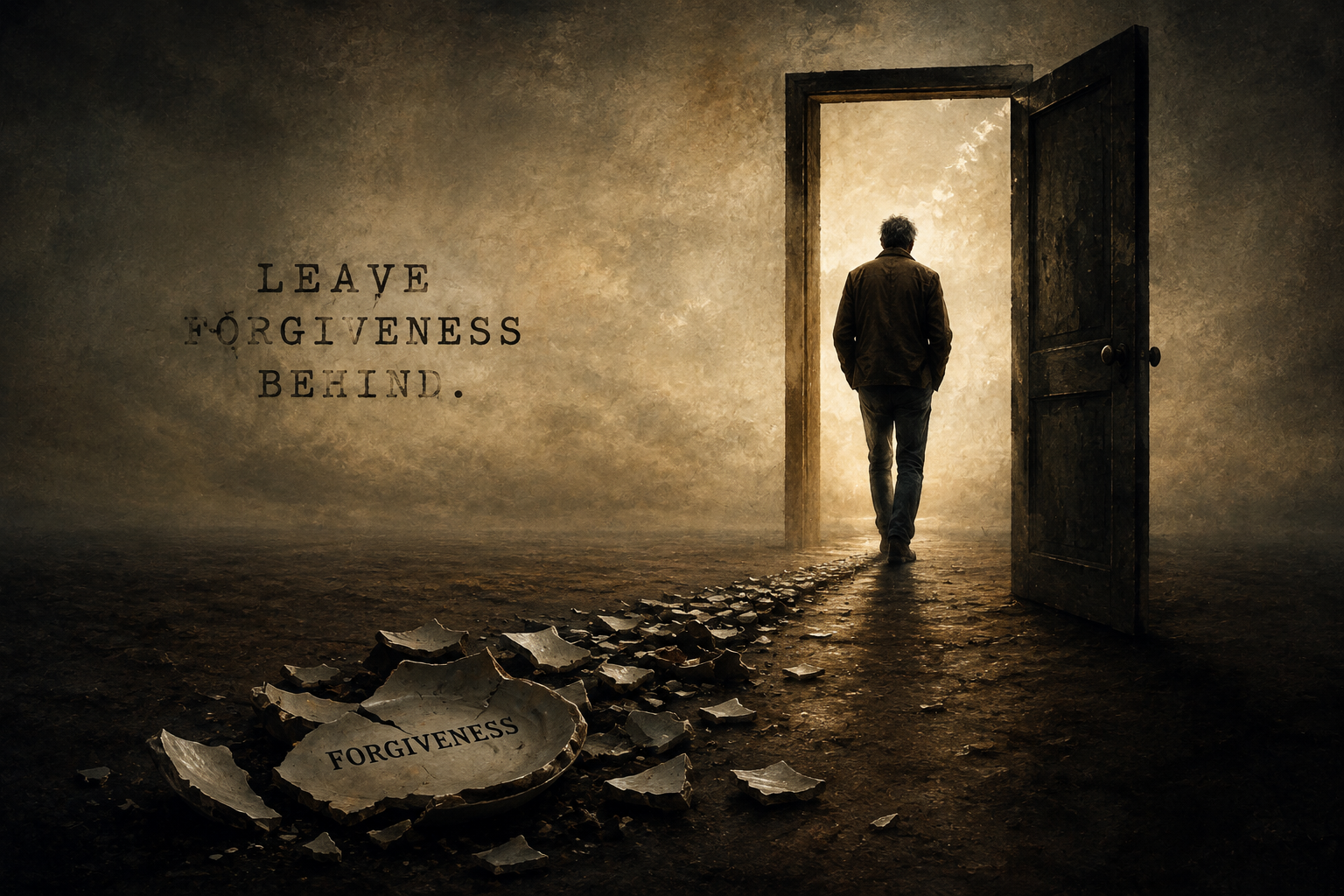
LEAVE YOUR CAPACITY FOR FORGIVENESS.
“Stuff this up your ass.”
“You must.”
“No. Not doing this. No way.”
“The door is preventing an event that should have happened years ago.”
“What event?”
“That information is above your level.”
“I don’t have a—what’d you say—level.”
“Everyone has a level. Most people call it self-respect.”
He tore the card in half. The pieces crawled back together.
“I repeat with a whole load conviction. Your ass. Stuff it right up in there.”
At two in the morning, Alan stood outside his first wife’s house.
The neighborhood was silent.
He had not seen Rachel in twenty-two years. Their marriage had ended without catastrophe. No infidelity. No violence. They had simply eroded each other through disappointment until the relationship resembled a bar of soap left too long beneath running water.
Removing the front door required no tools. The hinges released when he touched them.
Behind the door stood Rachel. She wore a nightgown. Her hair was white.
“You’re late,” she said.
“I didn’t think you’d be home.”
“I haven’t been home for twenty-two years.”
Alan felt a pressure behind his eyes.
“What?”
She walked past him into the yard. The house vanished. In its place stood a burned foundation.
Black timbers.
Weeds.
A rusted mailbox.
Rachel turned.
“You left before the fire.”
“There was no fire.”
“There was always a fire. We called it incompatibility because smoke sounds less frightening when described by a therapist.”
The front door trembled in Alan’s hands.
“I don’t understand.”
“You were supposed to forgive me.”
“For what?”
Rachel opened her mouth. Black smoke poured out. From inside it came the screams of three men, two women, and a baby.
Alan dropped the door.
His phone buzzed.
“Leave the forgiveness.”
“How?”
“You know how.”
“No, I don’t.”
“Think of everyone who hurt you. Decide they were right.”
The burned house brightened. Flames emerged from the foundation without heat.
He saw every humiliation he had carried like a private religion.
His father’s disappointment.
His mother’s fear.
His first wife’s quiet contempt.
His second wife’s infidelity.
Diane’s lies.
The supervisor who fired him.
The friends who disappeared.
The audiences who did not come.
The publishers who did not answer.
The younger men who inherited rooms he had spent his life preparing.
He saw all of it.
Then came the required thought.
They were right.
The words entered him like a blade. They were right to leave.
Right to lie.
Right to choose someone else.
Right to fire him.
Right to forget him.
Something tore loose in his chest. It floated from his mouth as a pale, fluttering thing shaped like a moth. Rachel caught it.
“Thank you,” she said.
The fire went out.
Alan woke at dawn on an empty lot next to an abandoned Aldi, his hands wrapped around a front door that no longer led anywhere. He felt strangely peaceful.
It was terrifying.
∞∞∞
After surrendering forgiveness, Alan began to improve.
His blood pressure normalized. His back stopped aching. He slept through the night. He no longer resented anyone.
This made him unbearable.
Friends mistook his emptiness for enlightenment. He spoke in gentle tones about release and acceptance. He stopped complaining about politics, money, bad art, corporate jargon, or people who brought their kids to the theater.
He became, in every social sense, a corpse with excellent posture.
The Parts Department promoted him.
His title changed to SENIOR FIELD RECLAMATION SPECIALIST. His salary rose to ninety-four thousand dollars.
Diane took him to lunch.
They ate in a restaurant with no windows. The servers had numbers instead of names. Every table was occupied by couples who did not speak.
“You’re doing very well,” she said.
“I don’t feel well.”
“Feelings are not a reliable performance metric.”
“I’m missing things.”
“Yes.”
“Parts of myself.”
“Yes.”
“And you say that like it’s normal.”
“It is normal. Most people surrender themselves for free. We provide benefits.”
Alan looked at his hands. His fingernails had grown back, but they were translucent. Beneath them, tiny words moved in rows. They looked like Latin.
“Why me?”
“Because you have always believed identity was a collection of stories.”
“It is.”
“No. Identity is inventory.”
She placed a final black envelope on the table.
“You are ready for the Longevity Program.”
“I didn’t ask for longevity.”
“No one does until the alternative is presented.”
Inside the envelope was a photograph of his mother’s house in Wichita.
The instruction card read:
ENTER THE RESIDENCE.
REMOVE THE WOMAN’S FEAR OF DEATH.
LEAVE YOUR FACE.
Alan stared at Diane.
“Please. Not this.”
His voice sounded weak.
“You are out of refusals.”
“That’s my mother.”
“Yes.”
“You said this was field reclamation.”
“It is.”
“What happens if I remove her fear?”
“She will become available.”
“To whom?”
Diane looked toward the kitchen. The door swung open. The tall figure from the photograph stepped out. Black suit. White shirt. No tie. A metal filing cabinet where its head should have been. The upper drawer slid open and inside rested dozens of human eyes.
“Mr. Vale oversees executive placement.”
The figure extended one pale hand.
“What does it want?”
Diane’s mouth opened. The second mouth above her heart answered.
“Continuity.”
The restaurant changed. The walls peeled backward and burned like flash paper. Behind them stretched an enormous warehouse filled with shelves. Human organs sat in labeled glass jars. Memories flickered inside black and white television screens with vintage VCRs. Voices whispered from slightly crushed cardboard boxes. Names hung from hooks like coats.
Workers moved through the aisles pushing carts. Some were missing eyes. Some had no mouths. Some wore faces that did not match their bodies. At the far end of the warehouse stood a conveyor belt carrying newborn babies beneath a machine that tattoo’d numbers onto their feet.
Alan backed away.
“What is this place?”
“The supply chain,” Diane said.
“For what?”
“For people.”
Mr. Vale’s drawer opened wider. A voice emerged from inside.
It was Alan’s voice.
“You imagine human beings arrive complete,” it said. “They do not. They are assembled from inherited fears, borrowed language, accidental appetites, civic myths, private wounds, and whatever scraps remain available.”
Another voice joined it.
Rachel’s.
“We distribute parts.”
Then his second ex-wife, Janice.
“We reclaim excess.”
Then Diane.
“We correct shortages.”
Alan looked at the workers.
“All these people worked for you?”
“Work is the oldest harvesting method,” Diane said. “A person gives away time, strength, thought, attention, health, loyalty, imagination, and love. At the end, they are congratulated for their service and presented with a pizza party.”
“What happens when there’s nothing left?”
“Management.”
Mr. Vale removed one eye from the drawer and placed it on the table. The eye belonged to Alan. He knew this without knowing how.
It blinked.
Inside its pupil he saw himself as a boy, standing in his grandfather’s doorway. Everyone was laughing. He saw the moment before the first guffaw, the huge terror and larger possibility. He remembered believing his life might become anything.
“That was taken from you at thirty-two,” Diane said.
“By whom?”
“Yourself.”
“No.”
“You chose security.”
“I chose rent.”
“Same altar. Different hymn.”
Mr. Vale placed a second object beside the eye. A small beating heart. It belonged to Diane.
“Give it back to her,” he said.
Diane laughed.
The sound broke midway through. For the first time, the skin of her face slipped. Beneath it was an older woman. Then older still. Then skeletal. Then young. Then nothing but a dark opening filled with tiny grasping hands.
“She has no use for it,” said Mr. Vale in Alan’s voice.
Diane’s face repaired itself.
“I recruited you because I remembered loving you, in my way” she said.
“You said you had no heart.”
“Memory is sometimes worse.”
Alan looked at the photograph of his mother’s house.
“If I do this, she dies.”
“Eventually.”
“If I don’t?”
“Eventually.”
“That isn’t a choice.”
“Now you understand employment.”
Mr. Vale’s hand settled on Alan’s shoulder.
He stood in his mother’s kitchen. Morning light spilled across the counters. His mother sat at the table in her robe, drinking coffee. She looked up.
“Alan?”
He touched his face. It was still there. For now.
“How did you get in?”
“You don’t lock your doors, mom”
“You look tired.”
“I’m working.”
“That’ll do it.”
She smiled. The ordinary tenderness of it nearly destroyed him. He sat across from her. On the table lay the instruction card. She could not see it.
“What are you working at?” she asked.
“Parts.”
“Car parts?”
“People parts.”
“That sounds awful.”
“It is.”
She nodded as though this confirmed something she had always suspected.
Outside, birds scratched at the lawn. The refrigerator hummed. A clock ticked. Every small household sound seemed sacred because it was temporary.
“Are you afraid of dying?” Alan asked.
His mother frowned.
“That’s a hell of a breakfast question.”
“Are you?”
“Of course.”
“Why?”
“Because I’ve never done it before.”
He laughed. A real laugh. It hurt.
She reached across the table and touched his hand.
“Mostly I’m afraid of leaving you and your sister with a mess.”
“You don’t need to worry about us.”
“That sentence has never once stopped a mother from worrying.”
Alan looked at her hand.
The veins.
The thin skin.
The wedding ring she still wore years after his father’s death.
He imagined removing her fear.
Imagined making her calm.
Making her compliant.
Making her available.
The Parts Department did not eat bodies. It ate resistance. The tiny stubborn animal inside every person that said no.
No, I will not forgive merely because forgiveness makes me easier to manage.
No, I will not surrender grief because grief is inconvenient.
No, I will not call exploitation opportunity.
No, I will not become peaceful by becoming empty.
Alan picked up the instruction card. He tore it in half. The halves rejoined. He tore it again. Again it repaired itself.
His mother watched.
“What is that?”
“A contract.”
“Those are hard to kill.”
He placed the card over the gas burner and turned the knob. Blue flame curled around the paper. The card screamed. Not metaphorically. It screamed with the voices of everyone Alan had heard behind walls, inside dryers, beneath floors, trapped in file drawers and mislabeled as resources.
The kitchen darkened.
Mr. Vale appeared behind his mother. Its cabinet-head scraped the ceiling.
Diane stood beside it.
“You cannot resign,” she said.
Alan kept the card in the flame.
“I’m not resigning.”
The paper blackened.
“I’m organizing.”
Throughout the warehouse, cabinets opened.
The first thing to escape was his fingernail.
Then the national anthem.
Then cinnamon.
Then the name of his first dog.
Then forgiveness.
It returned as a burning white animal and burrowed into his chest.
Pain followed. Glorious, human pain.
Resentment flooded him.
Rage.
Love.
Regret.
Every ugly, necessary piece.
The warehouse trembled. Workers stopped pushing carts. A woman without a mouth tore open the box containing her voice. A man wearing another person’s face began peeling it away. The conveyor belt jammed. The babies screamed. Mr. Vale reached for Alan.
His mother stood. She lifted the coffee pot and smashed it against the filing cabinet. Glass exploded. Hot coffee poured into the upper drawer. The human eyes inside blinked furiously. Mr. Vale staggered. Alan stared at his mother.
“What?”
She gripped the broken handle.
“I never liked management.”
Diane lunged. Alan caught her by the wrists. Her skin felt loose, barely attached.
“Help me,” she whispered.
It was the first honest thing she had said.
“How?”
“Give me something.”
“What?”
“Anything.”
Alan understood.
She had spent years feeding upon the discarded portions of others, yet nothing inside her belonged to her anymore. He kissed her forehead. Then he gave her the memory of their wedding day.
Not the marriage.
Not the betrayal.
Only the day.
Diane in a black cocktail dress because she thought it was edgy.
The slightly drunk minister in the Las Vegas wedding chapel.
Poetry spoken.
Music.
The idiotic, magnificent belief that love was not merely possible but personally guaranteed. The memory passed between them. Diane gasped. Her body became solid. Age struck her all at once. Her hair turned gray. Lines opened across her face. Her shoulders bent.
She began to cry.
“Alan,” she said.
She disintegrated into dust in seconds and, while there was no wind in the house, blew away and was gone.
It was not absolution. It was enough.
Mr. Vale straightened. Every drawer in its head opened. A hurricane of stolen pieces tore through the kitchen.
Teeth.
Names.
Songs.
Desires.
Nightmares.
A million abandoned selves spinning in a black corporate wind. Alan felt his face begin to loosen. The skin pulled away from his cheeks.
The assignment was collecting payment.
LEAVE YOUR FACE.
He grabbed the photograph from the envelope.
His mother’s house. The image showed the three of them now: Alan and his mother standing in the kitchen while Mr. Vale towered behind them.
Alan turned the photograph over. On the back was a blank signature line. He took the brass key from his pocket and drove its edge into his thumb. Blood welled.
He signed:
MR. VALE.
The photograph shuddered. The signature line drank the blood. Mr. Vale froze.
A red box appeared in the air.
PLEASE SELECT ANOTHER PERSON.
Alan smiled.
“No.”
He wrote the same name again.
MR. VALE.
The cabinet-head split down the center. From inside came a noise like ten thousand office workers realizing simultaneously that the meeting could have been an email. Mr. Vale collapsed inward. The suit crumpled. The cabinet shrank. Drawers slammed. The thing folded smaller and smaller until it became a black envelope lying on the kitchen floor.
Alan picked it up.
Across the front, in embossed letters, were the words:
HELP WANTED.
The warehouse vanished. Morning returned. His mother stood holding the broken coffee pot. Alan touched his face. It remained attached.
Mostly.
The left side felt unfamiliar, as though borrowed from someone who had smiled less. Alan looked at the envelope. It pulsed in his hand. Inside, something scratched. The Parts Department was not destroyed. Institutions like that never died. They changed names.
Rebranded. Restructured. Merged.
They waited for the next frightened person to confuse survival with surrender. Alan carried the envelope outside. He placed it on the driveway. His mother handed him a box of matches.
“You’re smoking again?” he asked.
“I contain multitudes.”
He lit the envelope. This time it did not scream. It laughed.
The black paper curled, and smoke rose into the morning sky. Within it Alan saw office towers, factories, hospitals, schools, theaters, churches, armies, marriages, families, every structure humanity had ever built to turn people into functions.
The smoke drifted toward the city. Somewhere, a phone rang. Someone desperate answered.
Alan watched until the final ash disappeared. He did not believe the danger had passed. He no longer believed danger passed. It changed clothes.
Still, he stood beside his mother, feeling every stolen thing claw its way back into place.
He was unemployed.
He was broke.
He was sixty.
He had failed repeatedly, loved badly, trusted foolishly, and spent half his life giving pieces of himself to people who filed them under miscellaneous. He was also, for the first time in years, almost entirely present. From inside the house came the ringing of the telephone.
His mother moved toward the door.
Alan stopped her.
“Don’t answer it.”
The ringing ceased.
A black envelope slid through the mail slot.
On the front were three words.
MANAGEMENT POSITION AVAILABLE.
Alan stared at it.
From somewhere deep beneath the house came the sound of a drawer opening. From inside that drawer, using Alan’s own voice, something whispered:
“Compensation commensurate with sacrifice.”
∞∞∞
Don Hall is a writer, storyteller, and creative mercenary whose wildly varied career—from homeless busker and Chicago public school teacher to theater producer, jazz musician, radio executive, and front-of-house manager at some of Chicago's most iconic venues—has given him an endless supply of stories and an abiding distrust of certainty.
He is the author of Belief Is a Thermonuclear Warhead, co-editor of The Literate Ape, and publisher of the Substack The Attention of Fools, where he writes about culture, politics, creativity, and the glorious absurdity of being human.