Instructions for the Proper Disposal of Dangerous Literature, or How I Accidentally Fell in Love During Office Hours
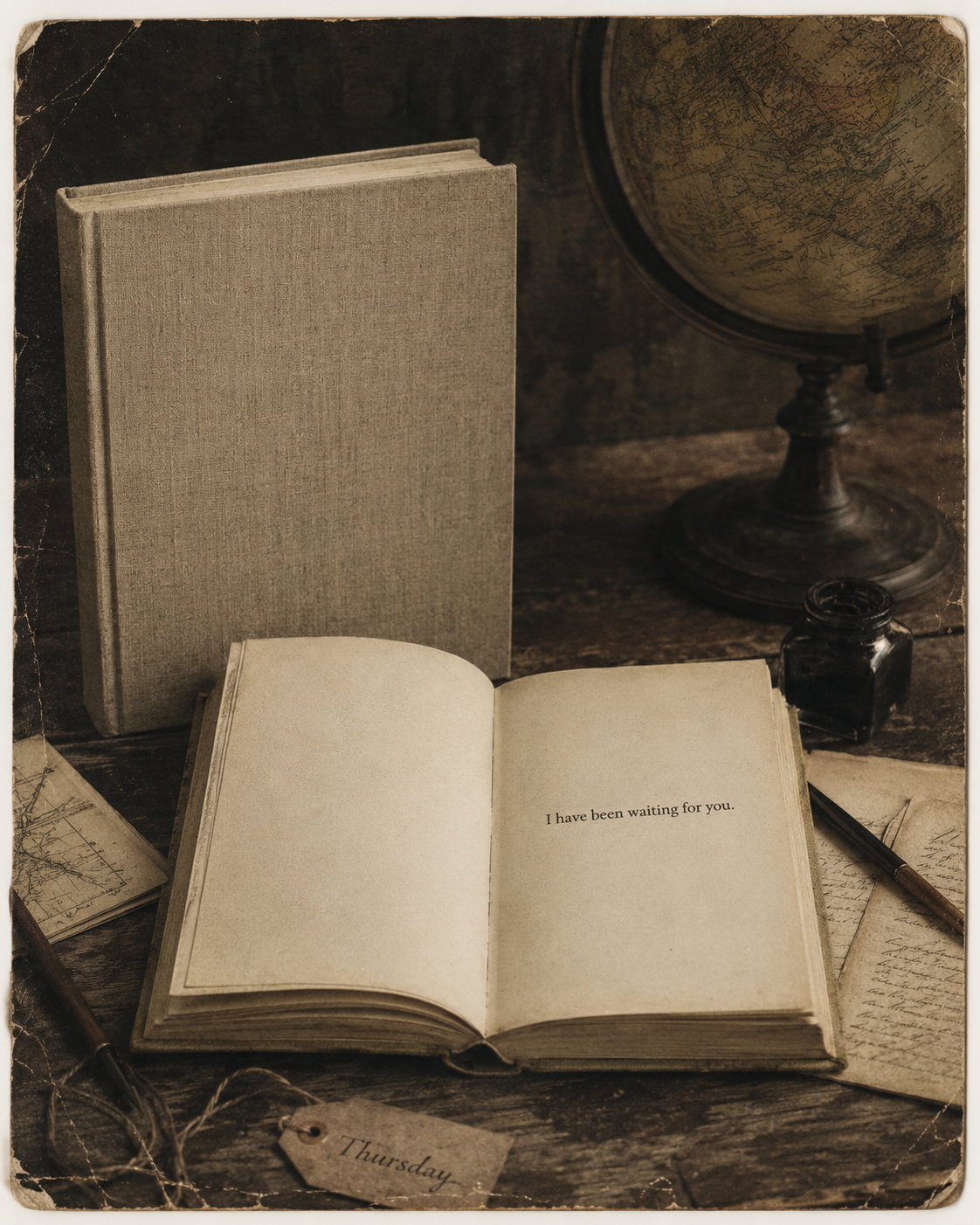
He met her on a Thursday.
Not her, exactly.
The book.
His job at the Ministry of Cultural Hygiene was to decide which books deserved destruction by fire. Every morning, a gray cart arrived stacked with confiscated volumes, each wearing a paper slip listing its crimes.
Historical ambiguity.
Unauthorized empathy.
Unsanctioned laughter.
Excessive individuality.
He was efficient. Read ten pages. Mark the form. Feed the furnace.
He told himself he never destroyed stories. Only paper. Ink. Binding material.
On Thursday came the book with no title.
Its cover was plain linen, the color of fossilized limestone. There was no author. No publication date. The first page contained only a sentence.
I have been waiting for you.
He frowned. Provocation. He looked over his shoulder at the cameras and kept reading.
The second page described the office where he sat. The third described the burn scar on his wrist from when he was twelve. The fourth recalled the smell of his mother's meatloaf before she'd disappeared into one of the Ministry's correction centers.
Impossible.
He checked the publication records. Nothing.
The book knew things no archive knew.
Every evening, instead of consigning it to the furnace, he slipped it into his satchel and carried it home. The book never repeated itself.
Some nights it told stories about civilizations that measured wealth in kindness. Other nights it wandered through impossible forests where trees remembered everyone who had rested beneath them. Occasionally it simply asked questions.
When did you stop wondering?
Who benefits when curiosity is illegal?
He began sleeping poorly.
His reports became shorter.
His burn piles became smaller.
He noticed, for the first time, that books made different sounds when they burned.
Cookbooks sighed.
Poetry crackled like laughter.
Children's books screamed without making a noise.
A copy of Fear and Loathing on the Campaign Trail ’72 growled like a pit bull.
Aldous Huxley’s A Brave New World giggled knowingly.
Every volume of Charles Bukowski’s sounded like a drunk leering at a broken woman.
Weeks passed.
The final page remained unwritten. Every morning a new page appeared. Every morning it somehow knew exactly what he needed to hear.
An inspector arrived unannounced.
"You've been delaying erasures."
"Quality assurance."
The inspector smiled the way butchers smile at livestock.
"Burn it. Now."
The furnace roaredThe inspector watched. The censor opened the book one final time.
The last page was complete.
Every book is written twice. Once by the author. Once by the person brave enough to let it change them.
He looked into the fire. Then at the shelves lining the evidence room.
Thousands of condemned books.
He realized something absurd. His entire career had been a love story. Not between himself and the Ministry. Between himself and every voice he'd been ordered to silence.
He placed the book into the flames. The inspector nodded approvingly. Paper blackened. Binding curled. Ash floated upward like fireflies.
“Carry on,” the inspector warned him. He nodded. He waited while her heels clacked hard on the concrete floor. He waited until he could hear them no longer.
Then he reached for the next book.
Instead of feeding it to the fire, he opened it. Then another. Then another.
By dawn, the furnace had gone cold.
Across the city, people would later swear they had found mysterious books waiting on their doorsteps—books they didn't remember buying, each opened to exactly the page they needed.
No one ever discovered who had distributed them.
The Ministry searched for years.
But stories, once they fall in love with the person sent to destroy them, develop a remarkable resistance to fire.
∞∞∞
Don Hall is a writer, storyteller, and creative mercenary whose wildly varied career—from homeless busker and Chicago public school teacher to theater producer, jazz musician, radio executive, and front-of-house manager at some of Chicago's most iconic venues—has given him an endless supply of stories and an abiding distrust of certainty.
He is the author of Belief Is a Thermonuclear Warhead, co-editor of The Literate Ape, and publisher of the Substack The Attention of Fools, where he writes about culture, politics, creativity, and the glorious absurdity of being human.