The Collective Fall from the Rise of the Elite
I recently read a story in New York magazine called “We Love Delta. We Hate Delta,” by travel writer Ben Ryder Howe. The story discusses Delta Airlines’ crafted plan to up the ante on elite traveling with its loyalty program, Delta 360°. I fly Delta quite a bit. I do not have any status whatsoever. My girlfriend does, however, and I do reap those benefits. But even she isn’t part of the over-the-top, Met Gala-like elite status the story discusses.
What I find troubling about Delta’s plans to further gild the most elite among us is how it’s slowly pushing out the majority of potential air travelers. More first class, more status earned not with miles flown but with dollars spent. The forecast appears to be that soon enough, the only affordable seat on a Delta flight for most of us will be on a Southwest plane.
Thinking about this late last night, I started jotting down thoughts on socioeconomics. The screed that follows are the unfiltered thoughts of a privileged, middle-age white man who works for himself and has long stressed over whether he’ll make the mortgage and will ever have enough bankable money to feel comfortable—not even rich, I don’t need Delta 360°, just comfortable—and provide for his family in a reasonable way.
✶
When we prioritize profit without considering the human influence, we run the grand risk of ruining people’s livelihoods. And that will always have a trickle down economic effect. But not in the way Reagan intended.
When you price out the majority, the opportunity for the elite cadre to grow becomes more difficult. Because you’ve pulled up the ladder. You’ve bought the boot maker and ceased manufacturing bootstraps because it saved you—well, not you, but the tippy-top few—a drop in the bucket’s worth of duckets. With no reasonable way to yank the bootstraps and climb the ladder, the elite homogenizes and inbreeds. Market sectors crumble because the majority, now the Common Unwashed, are underpaid or out of work. So they don’t have the means for travel or out-of-home dining, even at the fast food joints. The service industry always go first—if it’s not still already gone after Covid’s impact, and, of course, all the trouble being caused by the Iran War. And so, employees, third-party vendors… they all lose their jobs or become underpaid. Less means less. And less means fewer have the means to imbibe in or spend on more.
Gone are last minute purchases at the checkout counter, the extra few items needed to get past the threshold for FREE SHIPPING, etc. Home purchases drop along with home improvements. Fewer new cars get bought as we hold on to our aging clunkers, which is good for mechanics, but bad for car manufacturers. The big purchases are a thing of yesteryear’s American Dream. Because everything is connected. Every industry needs the other because it means money paid out leads to money paid in.
The descent is simple. Eventually, the wealthy will not be able to afford the strength required to hold everything up and together in the palm of their hand.
If our mistakes have consequences, and we must answer for them, shouldn’t the executive who made the poor business decision experience at least some of the pain being laid off due to factors beyond your control—your trusted leaders. Maybe they don’t lose their job. Because mistakes, decisions based on minimal knowledge, even the best available knowledge, will happen. And, of course, at the executive level, these mistakes and miscalculations come with greater impact. Just as their good choices do. And even then, are the bonuses relative to (more) appropriate earnings?
“We’re a team. A family.”
Yes. A dysfunctional team. An abusive family. Because no one in business cares about you. You—the human being. The person with interests and desires and a real family and kids and two dogs and maybe a hamster or fish or something and responsibilities and plans and investment accounts and elderly parents and knows they will one day, hopefully, be elderly, too. If the company considered that, perhaps they’d be more thoughtful in their business decisions, their payment structure, their culture of performative diversity and progressive global citizenry… Perhaps they’d be more thoughtful in the way they resource their humans.
If the company considered the person, our social contract would thrive. Competition would bolster better results. The tide of opportunity would rise and all our ships would float free of the muck, able to sail freely throughout the free market.
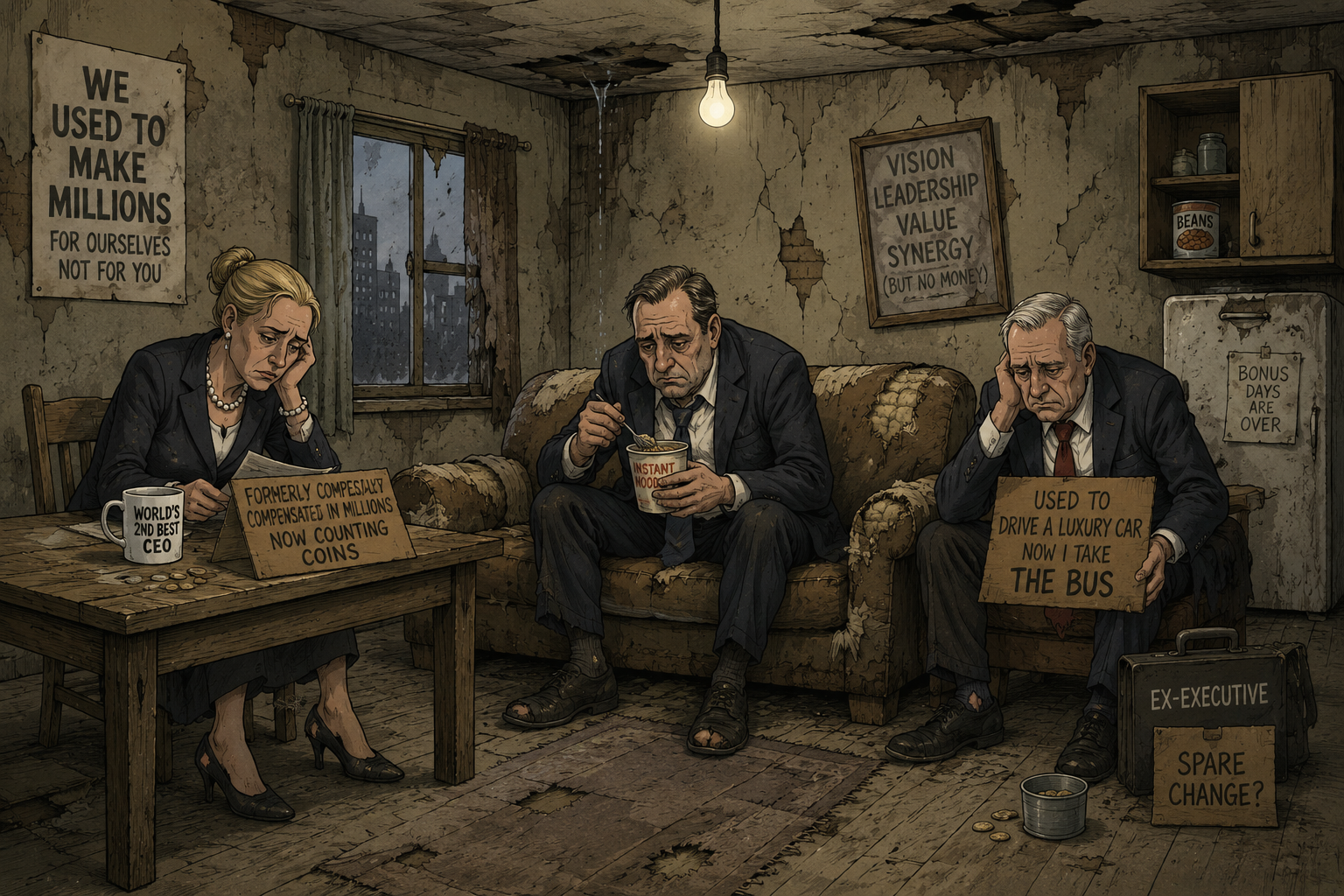
AI image creation like this is also not doing any favors for a sustainable workforce and thriving economy. We’re all guilty.