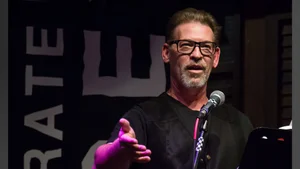
Discomfort Is the Only Honest Coach
by Don Hall
(republished from The Attention of Fools Substack)
If there was an understatement I can level at my past five years it is that things have been a bit uncomfortable. I’m not complaining, just observing. From the overdose death of my youngest nephew to the home hospice experience with my dad (and the wild tale of a third divorce) things have been a Great America ride with no safety bar and a toothless operator who giggles uncontrollably as you sit in the front car.
Perhaps that’s the way of things as one creeps winter to winter toward the finish line. The younger crowd I work with seem to do anything to avoid it (and, to be authentic, I would really love to careen past this sort of non-stop anguish if I could but apparently I can’t) yet giving discomfort a big welcoming bear hug is the key to learning from it.
Discomfort is not a flaw in the system—it’s the goddamn point. We’ve been suckling at the teat of convenience for so long we forgot that suffering was the original curriculum. No one learns a goddamn thing from a couch or an air-conditioned Starbucks. Every lesson worth learning has a splinter in it.
We spend our lives trying to escape discomfort like it’s a masked slasher in a third-rate horror film, but discomfort isn’t some Michael Myers out to butcher your serenity, it’s more like Burgess Meredith in Rocky, grizzled and pissed off, shouting, “Get off your ass and fight!” It’s not pretty. It doesn’t wear cologne. It smells like sweat and consequence. But it’s trying to get you somewhere you wouldn’t crawl to on your own.
And it’s the only thing that works.
Watch any prison flick from the 70’s—Papillon, Midnight Express, Escape from Alcatraz—and you’ll notice something: suffering isn’t just the setting, it’s the antagonist, the mentor, and the crucible. In Papillon, Steve McQueen eats bugs and counts time in darkness not because he’s a masochist, but because the soul is a muscle and it doesn’t grow without pressure. That’s the benefit of pain—it forces you into becoming someone who can fucking take it.
Discomfort strips away the fantasy that you can think your way into transformation. You can’t. You have to bleed into it.
The 1970’s didn’t trust comfort. And for good reason. It was the decade that knew the American Dream had termites. In Network, Howard Beale doesn’t snap because he’s unstable; he snaps because he’s the only one sane enough to realize the system is a padded cell decorated like a living room.
We’ve got the same problem now, only instead of a living room, it’s an Amazon Prime account and an $8.00 green juice.
Comfort is seductive. It offers security, predictability, and numbness. That stated, comfort deadens the edges. It makes you dull. It smooths out the corners where you used to have conviction. It turns the rebel in you into a brand consultant with a self-care podcast. Comfort is Hal 9000 in 2001: A Space Odyssey—polite, precise, and hell-bent on keeping you in your box.
“I’m sorry, Dave. I’m afraid you can’t grow today. That sounds hard.”
This embrace isn’t trauma. It’s not your dad’s fists or the sound of your mother crying into a pillow. Discomfort is something you step into on purpose. It’s choosing the cold shower. Choosing the harder route. Taking the meeting that makes your guts churn. It is the decision to walk into the fire with your eyes open.
It’s Roy Scheider in Sorcerer, hauling nitroglycerin over an unstable rope bridge in the jungle while the soundtrack of his own fear plays inside his skull. That’s life. The bridge will never be stable. The stakes are always fatal. And the only way across is to move anyway.
That’s discomfort. That’s growth.
We talk a lot about “being vulnerable” these days, like it’s a TED Talk topic instead of an emotional crucifixion. Emotional discomfort is the meat grinder that shaves the cowardice off your personality.
It’s what happens when you sit across from someone and tell them the truth. Not the Instagram truth. The ugly truth. The “I think I’m fucking up my own life and I might be broken” truth. Discomfort is telling your partner you don’t know if you’re still in love. It’s telling your kid you’re scared. It’s not weakness—it’s rebellion against the curated life.
If you want to be emotionally strong, put your heart on the chopping block and let it sweat a little.
People think Rocky is a boxing movie. It’s not. It’s first a love story. It’s also a goddamn psychological blueprint for surviving your own mediocrity. Rocky doesn’t win the fight. He gets the shit kicked out of him for 15 rounds and doesn’t fall down. That’s the win.
That’s the point.
Life isn’t about victory; it’s about durability. It’s about showing up when your knees are shot and your pride is limping. Discomfort teaches you where your edge is and how to go past it. Every push-up you do when your arms are jelly, every time you hit “send” on a job application you know might ghost you, every time you get back up after being told you’re not enough—that’s a round in the ring.
Discomfort is your cut man. It’s Mickey telling you to “…eat lightning and crap thunder.” It’s the Great Santini lording over you and declaring “Pain is just weakness leaving the body!” And if you’re smart, you’ll let it slap you across the face and shove you back into the fight.
Ever notice how all the best characters from the 70’s are a little broken and a little brilliant? Travis Bickle, Jake Gittes, R.P. McMurphy—they’re not comfortable. They’re restless, agitated, and crawling with questions. And sure, some of them are insane, but at least they’re awake.
Discomfort is the seasoning that gives your character actual flavor. It’s what keeps you from being the cinematic equivalent of Wonder Bread.
Go through a breakup. Get fired. Be misunderstood. And then don’t run from it. Chew on it. Let the bitterness ferment into wisdom. That’s how you develop depth. That’s how you go from extra to protagonist.
This path isn’t always some existential gauntlet. Sometimes it’s just doing reps when no one’s watching. It’s failing in front of an audience. It’s giving a presentation at work when your hands are shaking and your asshole’s clenching like it’s holding a grudge.
But that’s how you grow. Public discomfort builds composure. Private discomfort builds discipline. The gym is where your muscles scream and thank you. The stage is where your ego gets flogged. The office is where your patience is dragged behind a truck and somehow still shows up the next day with donuts.
In The French Connection, Popeye Doyle doesn’t get his man because he’s noble. He gets him because he refuses to stop. Discomfort is the filter that separates the curious from the committed. Everybody wants things. Very few people want them enough to suffer.
Hardship filters out the dabblers. You want to be a writer? Good. Now sit your ass down and bleed onto the page for five years. You want to be loved? Good. Now open your ribs and let someone see what’s inside, even when it’s not charming. You want to change your life? Fantastic. Now say no to the things you like in order to build a life you’ll love.
Difficulty is the toll booth on the road to better. Pay up or turn around.
What Happens When You Run From Struggle
What happens when you lean into comfort and avoid the uncomfortable awkwardness of inconvenience? You become soft. You become bitter. You turn into our bellicose friend Ignatius J. Reilly screaming at the sky without any plan to fix it. You build a personality out of avoidance and call it “vibes.” You settle for a lukewarm marriage, a predictable job, a curated social media feed that hides the fact that you stopped trying ten years ago.
Avoiding challenge doesn’t make you safe. It makes you fragile. And the world doesn’t care about your fragility. It will hit you anyway. The only question is whether you’ve built the muscle to take the hit.
Burden is not a phase. It’s not a punishment. It’s the admission price to every good thing. Joy, love, purpose—they all demand a pound of flesh. And that’s fair. That’s honest. That’s the only real economy we’ve got left.
So let it hurt. Let it burn. Let it shove you face-first into your limits and then punch through them anyway. Stop treating discomfort like it’s an error message. It’s the source code. It’s the coach that won’t coddle you. It’s the voice saying, “One more round.”
And if you want proof it works, go rewatch Rocky. Or Serpico. Or Taxi Driver. The ones who feel the most are the ones who change the most.
Discomfort is not the enemy.
It’s the beginning.